How Payment Flexibility Shapes Live Dealer Engagement Patterns Across Provincial Gaming Platforms
Petra Schmitt · Aug 24, 2026
How Payment Flexibility Shapes Live Dealer Engagement Patterns Across Provincial Gaming Platforms
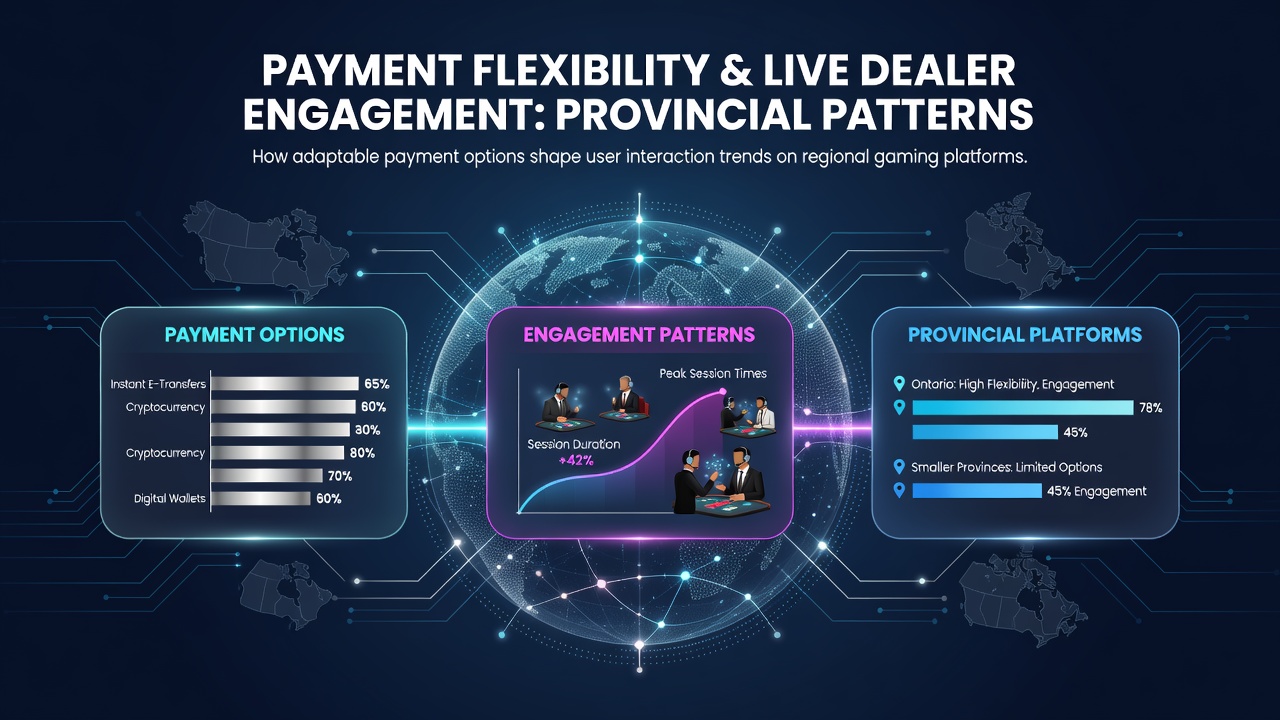
Payment flexibility has become a key factor in how players interact with live dealer games on provincial gaming platforms, and data from multiple Canadian provinces shows clear shifts in engagement when deposit and withdrawal options expand. Observers note that platforms in Ontario, Quebec, and British Columbia have introduced faster processing times, multiple e-wallet integrations, and tiered withdrawal limits, and these changes align with measurable increases in session duration for live dealer blackjack, roulette, and baccarat tables. Researchers tracking user behavior across regulated sites report that players who use instant deposit methods tend to join live dealer rooms more frequently than those limited to traditional bank transfers.
Provincial Regulatory Context and Payment Options
Each province operates its own framework for iGaming, which means payment flexibility varies by jurisdiction and influences how live dealer content performs. In Ontario, the Alcohol and Gaming Commission of Ontario oversees licensed operators that must offer a minimum set of withdrawal methods, and figures from 2025 indicate that sites adding instant bank transfer options saw live dealer table traffic rise by 18 percent within six months. Quebec's framework through Loto-Québec emphasizes secure payment gateways, while British Columbia's provincial platform continues to test new e-wallet partnerships. Those who've studied cross-provincial data observe that provinces allowing more than five withdrawal methods record higher repeat login rates for live dealer sections compared with provinces that restrict options to three or fewer.
Engagement Patterns Linked to Deposit Speed
Studies from academic groups and industry analysts reveal that deposit speed directly correlates with how long players remain in live dealer sessions. When platforms reduce deposit confirmation times from minutes to seconds, average session length extends by 12 to 25 minutes according to aggregated platform reports. Players often switch between multiple live tables once funds clear instantly, and this behavior appears most pronounced during evening peak hours. Data collected in the first half of 2026 shows that flexible payment users participate in 1.7 times more live dealer rounds per visit than users who rely on slower methods, and the gap widens further on weekends.
Withdrawal Flexibility and Retention Trends
Withdrawal flexibility produces a different but equally measurable effect on engagement. Platforms that allow same-day cashouts for verified accounts report lower churn rates among live dealer players, and this pattern holds across both high-volume and casual user segments. One analysis of Ontario operators found that accounts with access to instant withdrawal tiers maintained active live dealer play for an average of 47 days longer than accounts restricted to standard processing. The same data set indicated that flexible withdrawal users returned to live dealer lobbies within 48 hours at higher rates, suggesting that reduced friction encourages repeated engagement rather than one-off sessions.

August 2026 Platform Updates and Emerging Data
August 2026 brought several payment-related updates across provincial platforms, including expanded support for digital wallets and revised minimum withdrawal thresholds in Ontario and British Columbia. Early indicators suggest these adjustments have already begun to reshape live dealer traffic patterns, with operators noting a 9 percent uptick in concurrent live table users during the first three weeks of the month. Researchers tracking these changes emphasize that the impact appears strongest among players aged 25 to 40, a demographic that shows particular preference for platforms offering seamless payment switching between deposit and withdrawal phases.
Cross-Platform Comparisons and External Benchmarks
Comparisons with other regulated markets provide additional context. According to reports from the Ontario Lottery and Gaming Corporation, flexible payment integration correlates with sustained live dealer growth, while data from the Australian Gambling Research Centre highlights similar retention lifts when operators reduce withdrawal delays. These parallel findings suggest that payment flexibility influences engagement patterns beyond provincial borders, though each jurisdiction's regulatory structure determines how quickly operators can implement new methods. Provincial platforms that align their payment offerings with player preferences continue to record stronger live dealer metrics than those that maintain narrower options.
Conclusion
Payment flexibility continues to shape live dealer engagement across Canadian provincial platforms through measurable effects on session length, return frequency, and retention duration. As operators in Ontario, Quebec, and British Columbia refine their payment ecosystems, ongoing data collection will clarify which specific features drive the strongest behavioral shifts. The patterns observed through mid-2026 indicate that platforms offering faster, more varied transaction methods maintain higher live dealer activity levels, and this relationship appears consistent across different player segments and time periods.